• Find a Tour

Climb Denali (Mount McKinley) — West Buttress Expedition

Climb Denali (Mount McKinley) — West Buttress Expedition

Duration
19 Days 18 Nights
Validity date 2026

20 May - 10 June ( 1 Seat Left Only )

Validity date 2027

Price and Date On Request

Best Time
May, June, July
Region
North America
Price 2026
USD 14950
Activities
Mountain climbing, Trekking, Training expedition, Photography, Camping
Routes
Talkeetna – Kahiltna Base Camp – Carry – Kahiltna Pass – Cache Gear – Back Carry – Windy Corner – High Camp – Summit – Return to Talkeetna
Holidays Theme
Climbing the Seven Summits, International Climbing Expedition

Overview

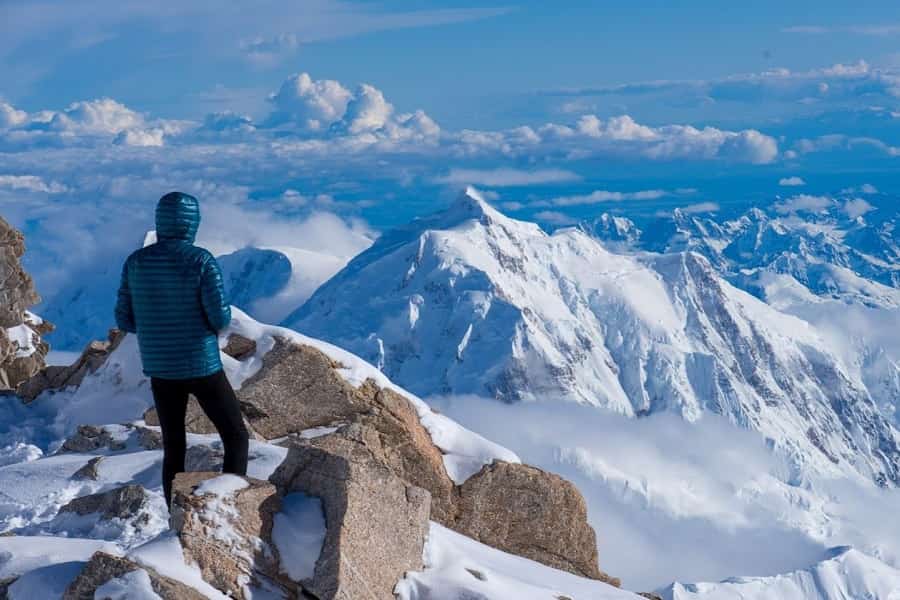
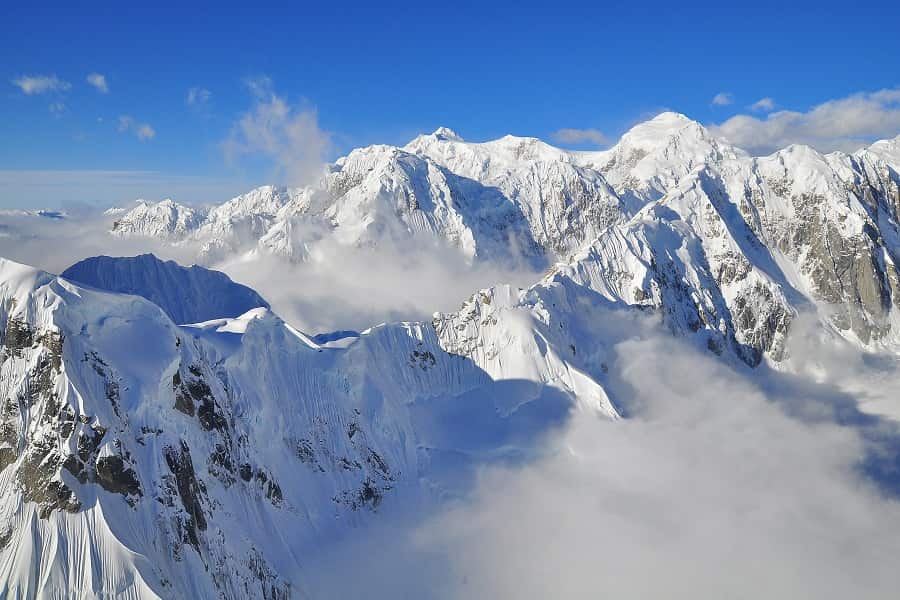
Denali, also known as Mount McKinley, is the highest mountain in North America, rising to 6,190 metres (20,310 feet) above sea level in the heart of Denali National Park, Alaska. In the Koyukon Athabaskan language, Denali means "The High One" and the mountain earns that name in every sense.
 
Situated just 200 miles south of the Arctic Circle, Denali is not merely a tall mountain. It is the coldest, most weather-exposed major peak on the planet. The sheer vertical rise from its base to summit approximately 5,500 metres is greater than any other mountain on Earth, including Everest. Storms can move in within hours. Temperatures at High Camp plummet to -40°C. Winds exceed 100 mph. Yet for experienced mountaineers, this is precisely what makes climbing Denali (Mount McKinley) one of the most coveted achievements in the world.
 
As one of the Seven Summits the highest peaks on each of the seven continents Denali sits alongside Everest, Kilimanjaro, Aconcagua, Vinson Massif, Elbrus, and Carstensz Pyramid. It is widely considered the most technically demanding of the Seven Summits, not because of extreme technical difficulty, but because of the weight of the conditions: brutal cold, complete self-sufficiency, and weeks of glacier travel at altitude.
 

Denali (Mount McKinley) — Key Facts at a Glance

Fact Denali
Official Name Denali (also historically Mount McKinley)
Location Denali National Park & Preserve, Alaska, USA
Height / Elevation 6,190 metres / 20,310 feet above sea level
Mountain Range Alaska Range, South-Central Alaska
First Ascent Hudson Stuck, Harry Karstens, Walter Harper & Robert Tatum — June 7, 1913
West Buttress First Ascent Bradford Washburn and team — 1951
Continental Status Highest peak in North America — one of the Seven Summits
Arctic Circle Distance Approximately 320 km (200 miles) south of the Arctic Circle
Climbing Permits NPS Mountaineering Special Use Fee: USD 440 (climbers 25+) / USD 340 (under 25)
Best Climbing Season Late May to late June (optimal weather and light)
Summit Success Rate Approximately 50% — one of the most demanding success rates of the Seven Summits
Primary Route West Buttress Route (used by over 90% of all Denali climbers)


The West Buttress Route

The West Buttress is the classic Denali route, used by over 90% of all climbers attempting the mountain. First climbed by legendary mountaineer Bradford Washburn in 1951, it is the most accessible, best-supported, and most logical line from base to summit but "accessible" on Denali is still a serious undertaking.
 
The route begins at Kahiltna Glacier Base Camp (2,195m / 7,200ft), reached by a breathtaking 30-minute ski-plane flight from Talkeetna, Alaska. From there, climbers travel north, ascending through a series of glacier carries and established high camps until reaching the summit at 6,190m (20,310ft). The route spans approximately 20 kilometres of glacier and ridge travel, with nearly 4,000 metres of vertical gain.
 

Camp by Camp Route Breakdown

Camp Location Elevation (m) Elevation (ft) What Happens Here
BC Kahiltna Glacier Base Camp 2,195m 7,200ft Fly in from Talkeetna. NPS check-in. Establish camp. Glacier & crevasse orientation. Sled rigging.
C1 7,800ft Camp 2,377m 7,800ft First glacier carry. Navigate Heartbreak Hill. ~8km, 365m elevation gain. Good acclimatisation warm-up day.
C2 Kahiltna Pass / 9,500ft Camp 2,896m 9,500ft Haul loads up the 549m Ski Hill. Double carries common. One of the most physically demanding load days.
C3 11,000ft / Motorcycle Hill Camp 3,353m 11,000ft Beautiful alpenglow camp. Move all gear here. Back-carry cache retrieval day follows
C4 14,200ft / Genet Basin Camp 4,328m 14,200ft THE heart of the expedition. NPS Ranger Station nearby. 2–3 acclimatisation days. Cache carry to 16,700ft. Most technical acclimatisation day here (Windy Corner traverse 700m gain).
C5 High Camp 5,242m 17,200ft Final camp. Build snow walls. Rest and acclimatise. Summit window assessment. Summit attempt departs from here.
SUM Denali Summit 6,190m 20,310ft Summit of North America. 360° panorama across the Alaskan wilderness. Return to High Camp or descend directly


The Key Technical Sections

While the West Buttress is considered the least technical route on Denali, several sections demand full mountaineering competency and cannot be underestimated:
 
▸  Heartbreak Hill — The descent from Base Camp onto the main Kahiltna Glacier. Deceptively tiring with heavy sleds. Named by climbers who dragged loads up it on the return.
 
▸  Ski Hill (7,800ft to 9,500ft) — A 549m / 1,800ft gain in one carry day. Often done twice (double carry). Steep, relentless, and where many climbers first feel the weight of their commitment.
 
▸  Motorcycle Hill (11,000ft to 13,300ft) — Steep snow climbing with crampons and ice axe. Spectacular views open up as you gain the ridge. Named for the sound the wind makes around the corner.
 
▸  Windy Corner (13,300ft) — The most notorious section of the lower-upper mountain. A 700m elevation gain carry around a corner fully exposed to Alaskan weather. Crevasse hazard above. Rockfall risk increasing in recent seasons. Fixed ropes on this section.
 
▸  The Headwall (14,200ft to 17,200ft) — A 50-degree snow slope — the steepest on the route. NPS-maintained fixed lines provide security. This is where the West Buttress earns its reputation. Full crampon technique, ice axe, and mental commitment required.
 
▸  The Autobahn (17,200ft to Denali Pass) — A long, exposed traverse above High Camp. The name comes from the speed at which winds cross this section. Temperatures at their most extreme. Summit weather window is everything here.
 
▸  Summit Ridge to the Top — Above Denali Pass, the summit ridge demands careful navigation in high-altitude cold. Snow conditions vary by season. The final push to 6,190m is never easy — but the panorama across the Alaskan wilderness is unmatched on Earth.
Climb Denali (Mount McKinley) — West Buttress Expedition itinerary

Day 01 – Arrival in Anchorage

▸  Meet guides at the designated group hotel at 12:00 PM.
▸  Full gear check every item inspected and approved before the mountain.
▸  Overnight at group hotel (shared).
 
 
Day 02 – Anchorage to Talkeetna

▸  Early morning shuttle to Talkeetna (approx. 2 hours).
▸  Mandatory National Park Service pre climb briefing at the Walter Harper Talkeetna Ranger Station all climbers must attend.
▸  Final packing, gear, and load organisation.
▸  Overnight at group lodging in Talkeetna.
 
 
Day 03 – Fly to Kahiltna Glacier (7,200 ft)

▸  Scenic 30 minute ski plane flight over the Alaska Range to Kahiltna Glacier Base Camp one of the great aviation experiences in mountaineering.
▸  Check in with NPS Base Camp Rangers. Establish camp.
▸  Glacier orientation: crevasse rescue, rope management, sled rigging, and team protocols.
 
 
Day 04 – Base Camp to Ski Hill Camp (7,600 ft)

▸  First full glacier carry day the expedition begins in earnest.
▸  Drag sleds approximately 5.5 miles across the lower Kahiltna Glacier.
▸  Heavy load carry day expect 20 - 30kg on your back plus a sled. This day sets the tone for everything ahead.
▸  Establish Ski Hill Camp. Rest and rehydrate.
 
 
Day 05 – Ski Hill Camp to Camp 2 (9,600 ft)

▸  Carry loads up the sustained Ski Hill one of the most physically demanding carry days on the expedition.
▸  Option for double carry and caching gear at 9,600ft climb high, cache, descend, sleep low.
▸  This acclimatisation strategy is key to a safe, successful summit push.
 
 
Day 06 – Camp 2 to Camp 3 (11,000 ft)
 
▸  Move all gear up to Camp 3 at 11,000ft a spectacular camp ringed by glacier walls and alpenglow.
▸  Full load carry with crampons now in use. Establish and dig in camp.
▸  Rest, eat, and acclimatise at altitude for the first time above 10,000ft.
 

Day 07 – Active Rest Day

▸  Active rest day with a critical purpose: back carry to retrieve cached gear from below.
▸  Return to Camp 2 (9,600ft) to collect previously cached equipment and food.
▸  The "climb high, sleep low" principle in full effect this day builds the acclimatisation base that will carry you to the summit.
▸  Return to Camp 3. Full rest. Eat well.
 
 
Day 08 – Cache at 13,500 ft (Windy Corner)
 
▸  Carry a heavy cache load up to 13,500ft the notorious Windy Corner zone.
▸  Navigate the exposed Windy Corner traverse: fully open to the Alaskan weather, with crevasse hazard above.
▸  Deposit cache. Return to Camp 3 (11,000ft) to sleep low.
▸  This is the most committing carry day of the expedition to this point.
 
 
Day 09 – Move to 14 Camp (14,000 ft)

▸  The biggest single camp move of the expedition from Camp 3 to 14 Camp, the heart of the Denali climb.
▸  Pass through Windy Corner in full ascent exposed, steep, and demanding.
▸  Establish camp at Genet Basin (14,000ft). NPS Ranger Station is nearby emergency assistance available from this point.
▸  Build snow walls. Dig in. This will be home for several days.
 
 
Day 10 – Cache Retrieval Day
 
▸  Descend to Windy Corner area to retrieve the cache deposited on Day 08.
▸  Back carry loads to 14 Camp. Consolidate all food and gear at this elevation.
▸  Rest, hydrate, and begin the serious acclimatisation phase.
 

Day 11 – Acclimatization Day at 14 Camp
 
▸  Full acclimatisation day at 14 Camp one of the most important days of the expedition.
▸  Optional fitness hike to gain altitude and stimulate red blood cell production.
▸  Team medical check. Weather assessment. Gear organisation for the upper mountain.
▸  Do not rush this day. The summit is won or lost at 14 Camp.
 

Day 12 – Carry to 16,700 ft / High Camp Cache
 
▸  One of the expedition's hardest and most committing days.
▸  Ascend the 50 degree Headwall on NPS fixed ropes to 16,700ft the technical crux of the West Buttress Route.
▸  Deposit High Camp cache. Temperatures extreme above 16,000ft full down suit required from this point.
▸  Descend back to 14 Camp to sleep. Total elevation gain and loss: ~1,500m round trip.
 

Day 13 – Extra Acclimatization Day (Weather Buffer)
 
▸  Dedicated weather buffer and additional acclimatisation day.
▸  Denali's weather systems can lock teams at 14 Camp for days this buffer is essential, not optional.
▸  Use the time wisely: sleep, eat, hydrate, mentally prepare for High Camp and the summit.
▸  Summit teams that skip this day have statistically lower success rates.
 

Day 14 – Move to High Camp (17,200 ft)
 
▸  The final and most altitude gaining camp move of the expedition.
▸  Re ascend the Headwall on fixed ropes. Retrieve the cache deposited on Day 12.
▸  Establish High Camp at 17,200ft. Build robust snow walls winds here regularly exceed 100 mph.
▸  From High Camp, the summit is 1,000 vertical metres above. The hardest work begins tomorrow.
 
 
Day 15 – Summit Attempt or Rest Day
 
▸  Primary summit window. Depart High Camp in the early morning.
▸  Traverse the Autobahn a long, exposed ridge traverse at extreme altitude.
▸  Cross Denali Pass (18,200ft). Ascend the Football Field. Push to the summit at 6,190m / 20,310ft.
▸  360 degree panorama across the Alaskan wilderness. The summit of North America.
▸  If weather is unsuitable, rest and reassess for Day 16. Summit decisions are always guide led.
 

Day 16 – Second Summit Attempt (If Required)
 
▸  If Day 15 was a rest day due to weather or team condition today is the summit push.
▸  Patient, weather-smart teams regularly summit on this day.
▸  Same route: Autobahn → Denali Pass → Football Field → Summit Ridge → 20,310ft.
▸  Descend to High Camp after summiting.
 

Day 17 – Descend to Camp 3 (11,000 ft)
 
▸  Full descent day. Enormous elevation loss in a single push.
▸  Rappel the Headwall. Navigate back through Windy Corner. Return to Camp 3.
▸  The body reabsorbs altitude rapidly on descent. Fatigue is significant after the summit push.
▸  Eat well. Sleep well. The hard work is done.
 

Day 18 – Descend to Base Camp
 
▸  Final descent day return to Kahiltna Glacier Base Camp.
▸  Drag sleds back down the lower glacier. Dismantle camp and prepare gear for the flight out.
▸  Celebrate with the team. The expedition is complete.
▸  NPS Base Camp Ranger check out.
 

Day 19 – Fly back to Talkeetna (Weather Permitting)
 
▸  Ski-plane out from Kahiltna Glacier Base Camp back to Talkeetna weather permitting.
▸  NPS check out at Talkeetna Ranger Station. Expedition formally closed.
▸  Showers, hot food, cold beer, and the deep satisfaction of having climbed Denali.
▸  Note: Flight from the glacier is always weather dependent. Allow flexibility in your return travel from Anchorage.

"This Denali/McKinley expedition climb is provided by IMG Denali, LLC, an authorized concessioner of Denali National Park"


Frequently Asked Questions — Climbing Denali (Mount McKinley)

Q. How much does it cost to climb Denali?
Ans. The total cost to climb Denali depends on where you are joining from, your existing gear, and the guide company you choose. Our guided expedition fee is USD 14,950 per person
 
Q. How long does it take to climb Denali?
Ans. Our guided expedition is 19 days (18 nights) from arrival in Anchorage to departure.
 
Q. How hard is it to climb Denali?
Ans. Climbing Denali (Mount McKinley) is genuinely hard harder than most Seven Summits by the measures that matter: duration, weight of load carries, cold, and the sustained commitment required. 
 
Q. What is the West Buttress Route on Denali?
Ans. The West Buttress Route is the standard climbing route on Denali, first ascended by Bradford Washburn in 1951. Today, over 90% of all climbers attempting Denali use this route. 
 
Q. Is Denali the same as Mount McKinley?
Ans. Yes, Denali and Mount McKinley refer to the same mountain. The peak was officially named Mount McKinley in 1917. In 2015, the U.S. Department of the Interior restored its original Athabaskan name, Denali, meaning 'The High One.' The name Denali is used by NPS, the mountaineering community, and officially by the State of Alaska. 
 
Q. Where is Denali / Mount McKinley located?
Ans. Denali is located within Denali National Park and Preserve in south-central Alaska, USA — approximately 320 kilometres (200 miles) south of the Arctic Circle. The nearest gateway town is Talkeetna, Alaska, where all expedition climbers register with the National Park Service and fly to Base Camp. The nearest major airport is Ted Stevens Anchorage International Airport (ANC), approximately 2 hours south of Talkeetna by road.
 
Q. What is the height / elevation of Denali?
Ans. Denali stands at 6,190 metres (20,310 feet) above sea level. This makes it the highest mountain in North America and the highest peak in the United States. 
 
Q. Do I need a permit to climb Denali?
Ans. Yes, all climbers on Denali must obtain a National Park Service (NPS) Mountaineering Special Use Permit. 
 

Tour Highlight

➾ Climb the Highest Peak in North America at 6,190m (20,310 ft), a bucket-list achievement for any mountaineer.
➾ Scenic Bush Plane Flight from Talkeetna to Kahiltna Base Camp, flying over dramatic glaciers and rugged peaks.
➾ True Alpine-Style Climbing with full self-sufficiency — carry all gear, set camps, and cook together as a team.
➾ Technical Glacier Travel navigating crevasses, fixed ropes, and steep snow climbs.
➾ Experience Arctic Wilderness with untouched landscapes, towering ice walls, and pure isolation.
➾ One of the Toughest Seven Summits, demanding peak physical fitness, technical climbing skills, and mental resilience.
➾ Incredible Photography opportunities from base camp to summit, capturing Alaskan grandeur in every frame.

WHAT IS INCLUDED

• Professional international mountain guides (2:1 ratio)
• Ski-plane flights to and from Kahiltna Glacier
• Group tents, ropes, stoves, sleds, fuel
• On-mountain breakfasts, dinners, and hot drinks
• Shared hotel accommodation for first 2 nights
• Group shuttle from Anchorage to Talkeetna
 
WHAT IS NOT INCLUDED

• International & domestic flights to Anchorage
• National Park Service climbing permit & entrance fees
• Personal lunch & snack food on the mountain
• Meals in Talkeetna
• Extra hotel nights due to delays or early return
• Transfers from Talkeetna to Anchorage after expedition
• Travel & medical insurance (mandatory)
• Emergency evacuation costs after Talkeetna
• Guide tips/gratuities

Note: Actual summit day depends entirely on weather and team condition.

Cancellation Policy & Terms
Full terms: Shikhar Travels T&C
Note: Visa support available, issuance at embassy discretion

Duration: 59 Day 58 Night
Places Covered: North ridge
Duration: 58 Day 57 Night
Places Covered: Kathmandu – Namche Bazaar - Khumjung - Tengboche - Dingboche - Lobuche - Everest Base Camp - Lobuche - Pheriche - Namche Bazaar - Lukla - Kathmandu
Duration: 20 Day 19 Night
Places Covered: Chile - Antarctica - Vinson Base Camp - C1 - C2 - Union Glacier
Duration: 3 Day 2 Night
Places Covered: Sydney → Thredbo → Mount Kosciuszko Summit → Canberra
Duration: 20 Day 19 Night
Places Covered: Mendoza - Penitentes - Plaza Argentina - Plaza de Mulas - Mendoza
Duration: 9 Day 8 Night
Places Covered: Route No.-1: Machame Route
Duration: 8 Day 7 Night
Places Covered: Mineralnye Vody - Mt. Cheget - Mountain Refuge Camp - Pashtukov Rocks - Moscow
Duration: 9 Day 8 Night
Places Covered: Route 1: Marangu Route Route 2: Machame Route
Duration: 11 Day 10 Night
Places Covered: Timika → Carstensz Pyramid Base Camp → Summit → Base Camp → Timika
Inquiry / Share :
Booking Form
Why book with us ?
  • High Operating Standards
  • Friendly and Knowledgeable Staff
  • Personal travel consultants
  • Tailor made holiday packages
  • Private Tours for individuals and groups.
  • Guarantee Fixed Departures
  • Flexibility in organising and bookings
  • Recognised by Government of India
  • Save time and effort
  • Licensed and Recognised Tour Operator
Latest Programs
International And National Membership

Recognised by Ministry of Tourism, Government of India as Inbound Tour Operator & Adventure Tour Operator. Registered with Indian Mountaineering Foundation.

Multiple Time National Tourism Award Winner
Join Our Newsletter
Copyright 2026 Shikhar Travel India Pvt Ltd. All Rights Reserved.